




Furnace Repair vs Replacement: Which Option Makes Sense for Your Victoria Home?
Deciding whether to repair or replace your furnace is one of the biggest home‑comfort decisions you’ll make in Victoria, BC. This practical guide walks you through the safety signs, diagnostic checks, and financial trade‑offs that determine whether a repair makes sense or a replacement is the better long‑term choice. You’ll learn which failures are usually inexpensive to fix, when age and falling efficiency tip the balance toward a new unit, which safety issues need immediate action, and how local rebates and financing can change the numbers. We cover repair‑friendly problems, clear replacement indicators, Victoria‑specific cost context, the benefits of high‑efficiency furnaces, and how regular maintenance extends equipment life — all in simple checklists and comparison tables so you can act with confidence.
How do you know when a repair is the right move?
A repair makes sense when the fault is isolated, the part can be serviced or replaced, and the furnace’s age and efficiency mean repairing is the most economical way to keep it running. Typical repairable issues include blocked airflow, thermostat or control faults, and minor ignition or electrical problems. Fixing those restores safe, efficient operation with minimal downtime. In short: targeted repairs restore the specific parts — for example the blower motor or ignitor — without replacing the whole system, keeping usable life and delaying a larger investment. Use the diagnostic criteria below to weigh safety, performance, and lifecycle cost before choosing replacement. The following sections explain common repairable problems and how a unit’s age affects that decision.
Which common furnace problems are usually worth repairing?
Most cost‑effective repairs are part‑level fixes that return the system to normal without a full replacement. Examples include recalibrating or swapping a thermostat or control board, cleaning or replacing clogged filters, and repairing an ignitor or pilot assembly. These fixes tend to be a small fraction of the cost of a new furnace and restore safe combustion and proper airflow. Technicians often follow quick diagnostic steps — for example — to find the root cause and recommend the right repair. If you’re seeing multiple unrelated failures or the same repair keeps repeating, the next section explains when age makes replacement the smarter choice.
How does a furnace’s age change the repair vs replace decision?
Age matters because older furnaces face wear, parts obsolescence, and greater risk of cascading failures. As units near or pass their expected service life, replacement parts can be harder to find, efficiency drops, and the chance of major breakdowns rises — all of which increase the long‑term cost of repeated repairs. As a practical rule, furnaces under about 10–12 years often justify repairs for isolated problems, while units older than 15 years should prompt a full replacement evaluation that factors AFUE and ongoing operating costs. Maintenance history and repair frequency also matter — well cared for systems can last longer, while neglected ones will tell you to act sooner. These age considerations help you spot clear replacement signals in the next section.
If you’d like a professional opinion, H.I. Mechanical Inc. offers on‑site assessments and emergency repairs across Victoria and nearby areas. Our technicians perform evidence‑based inspections focused on safety and lifecycle cost, and can arrange same‑day emergency service when hazards are present. If you follow the checklist here and still want a pro evaluation, we’ll inspect the system and give a clear repair‑or‑replace recommendation with a written quote. That makes the decision practical and documented.
What signs clearly point to replacement?
Replacement becomes the right choice when safety, performance, and long‑term cost line up in favour of a new, efficient system. Key signals include advanced system age, frequent major repairs, repair bills that approach replacement cost, and urgent safety failures such as a cracked heat exchanger that can allow carbon monoxide into the home. Mechanically, chronic inefficiency and repeated parts failures show the system is degrading — fixing single parts no longer restores reliable heating. Spotting these signs early prevents safety risks, rising fuel bills, and helps you take advantage of incentives for efficient replacements. The sections below explain typical scenarios and the safety protocols that usually require replacement.
When is replacement the smarter choice than repair?
Replacement is usually the better option when repair costs get close to a large share of a replacement, when breakdowns are frequent, or when higher efficiency will produce meaningful savings. A common rule of thumb: if a single repair costs more than roughly half of a fair replacement estimate, it’s worth seriously considering replacement — but combine that with the unit’s age and repair history before deciding. Think in lifecycle terms: remaining repair costs plus projected fuel bills versus the operating savings from a high‑AFUE unit. In many cases, repeated failures and rising heating bills are the clearest signal that a new furnace will be more reliable and cheaper over its remaining life. Safety‑related triggers are the next, non‑negotiable consideration.
How do safety issues like a cracked heat exchanger affect the choice?
Safety problems — particularly a cracked heat exchanger or signs of combustion gases indoors — require immediate action. A cracked heat exchanger can allow flue gases and carbon monoxide into living spaces; the link is direct: . Technicians treat this as a replacement‑level fault rather than a routine repair. Inspections typically include combustion analysis, a visual check of the heat exchanger where accessible, and CO monitoring. If a breach or abnormal combustion is confirmed, the correct response is to shut down the furnace and arrange replacement or removal from service. Safety always overrides cost concerns because it protects people and property.
Furnace Repair vs Replacement: Victoria Homeowners' Guide
Local costs matter in Victoria because labour rates, permit needs, fuel types, and available rebates all affect the final numbers. Repairs span minor parts‑and‑labour jobs up to major component swaps; full replacement costs depend on unit efficiency, fuel type and installation complexity. A simple EAV‑style comparison helps you spot clearly inexpensive fixes, borderline repairs, and situations where replacement delivers better lifecycle value. The subsections below list common repair cost bands and typical installed replacement ranges, plus the local factors that shift the balance for Victoria homeowners.
What are typical repair costs for common furnace issues?
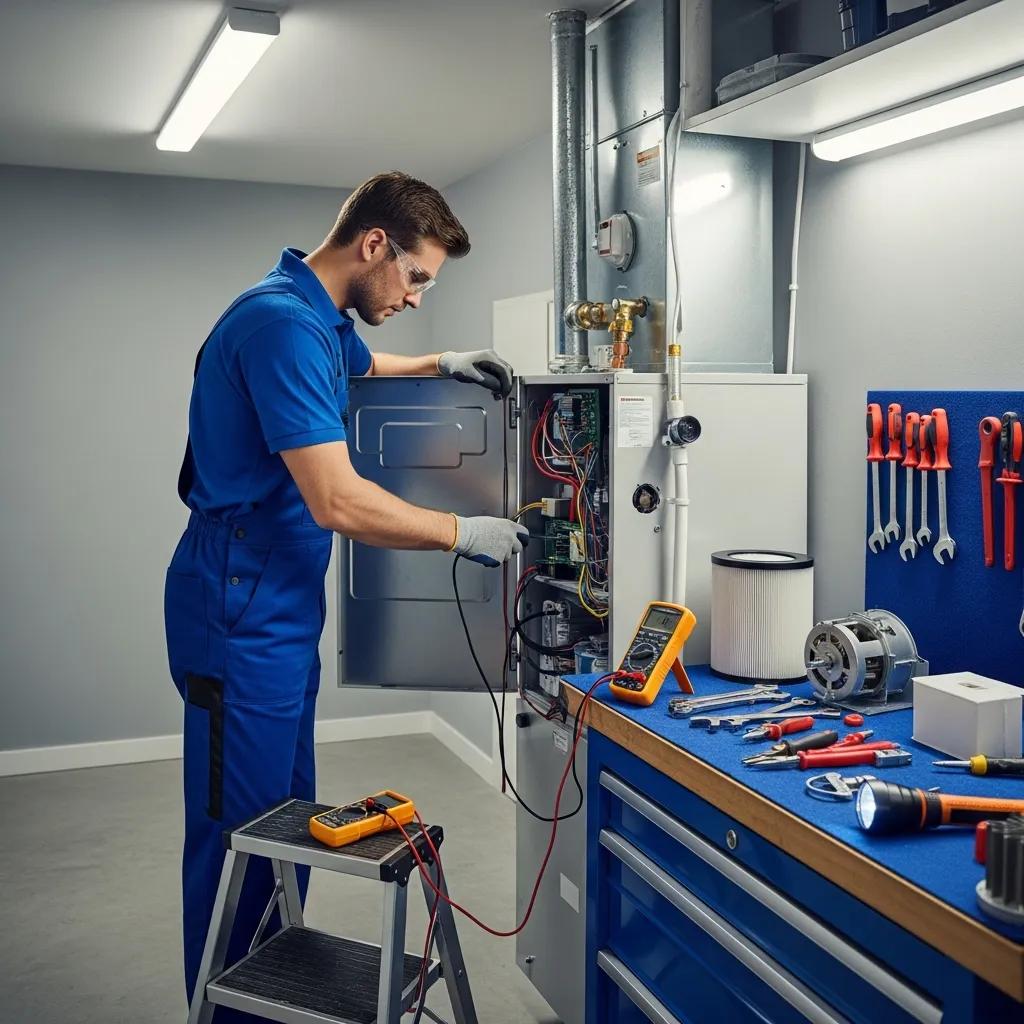
Repairs generally fall into three bands: minor services, medium component replacements, and major repairs like heat‑exchanger or blower motor replacement. Minor jobs — thermostat swaps, filter changes, ignition repairs — are low cost and restore function fast. Medium repairs such as blower motor or control board replacement are pricier but often justified for newer systems. Major jobs, especially heat‑exchanger work, are expensive and often point toward replacement because of safety and remaining life concerns. The table below summarizes common repair items, their typical cost band, and whether they usually signal repair or replacement.
How different repair items usually affect your decision:
| Component | Typical Repair Implication | Repair vs Replacement Implication |
|---|---|---|
| Air filter / airflow cleaning | Low cost, routine maintenance | Repair recommended — improves efficiency and comfort |
| Ignitor / pilot assembly | Low–medium cost, quick turnaround | Repair if the system is under < 10 years old |
| Blower motor | Medium–high cost with significant labour | Repair for newer units; consider replacement for older systems |
| Control board / thermostat | Medium cost, restores reliable controls | Repair common for modern units; replacement depends on age |
| Heat exchanger | High cost and safety‑critical | Replacement usually recommended due to CO risk |
H.I. Mechanical Inc. can help Victoria homeowners with financing and rebate guidance to make sensible choices when replacement becomes the most practical path. Local knowledge of provincial and federal incentives — plus financing options — often reduces the net cost and can make an efficient upgrade affordable.
What does a new furnace installation typically cost?
Installed replacement costs depend on unit AFUE, fuel type (natural gas vs electric), capacity, any required ductwork or venting changes, and local labour. Prices range from mid‑efficiency baseline units to higher‑end, modulating models; complexity (single‑stage vs modulating burners, sheet‑metal work) increases labour and materials. Beyond the unit price, correct sizing and quality installation determine long‑term efficiency and comfort. The table below outlines the replacement factors that most affect installed cost so you can compare quotes more confidently.
| Replacement Factor | Attribute | Impact on Installed Cost |
|---|---|---|
| Unit Efficiency (AFUE) | Higher AFUE reduces fuel use but raises unit cost | Higher AFUE increases upfront price but lowers lifecycle cost |
| Fuel Type | Natural gas, electric, or hybrid options | Choice of fuel and equipment shifts both purchase and operating costs |
| Labour & Complexity | Ductwork modifications, venting, access constraints | More complexity raises labour and material charges |
| Warranty & Brand | Longer warranties or premium brands | May cost more upfront but can increase long‑term value |
| Permits & Compliance | Local code and permit requirements | Adds to upfront cost and ensures a safe, compliant installation |
What are the benefits of upgrading to a high‑efficiency furnace?
Switching to a high‑efficiency furnace delivers real, measurable improvements: lower fuel use, steadier comfort, and often better indoor air quality. High‑efficiency units use advanced combustion controls, variable‑speed blowers, and higher AFUE ratings to turn more fuel into useful heat and reduce cycling losses. The result is lower monthly energy bills, more even temperatures, and improved filtration and airflow that cut dust and allergens. Factoring in rebates and the expected energy savings helps homeowners estimate payback and prioritize upgrades. The sections below outline likely energy savings, comfort gains, and local rebate opportunities for Victoria residents.
How will a new furnace reduce energy bills and improve comfort?
Higher AFUE, reduced cycling, and better modulation mean a high‑efficiency furnace wastes less fuel and keeps indoor temperatures steadier. Upgrading to a modulating furnace or a system with a variable‑speed blower can cut heating use by roughly 10–30%, depending on your old system and your home’s envelope. Comfort improves because variable‑speed blowers and multi‑stage burners match output to demand, limiting temperature swings and lowering noise. Better filtration and airflow also reduce dust and allergens. Those savings and comfort benefits are why many homeowners choose replacement not just for lower bills, but for a noticeably better living environment.
Before-and-after comparisons to estimate impact:
| Efficiency Metric | Typical Improvement | Comfort / IAQ Benefit |
|---|---|---|
| AFUE increase (example) | 10–25 percentage points | Lower fuel use and smaller heating bills |
| Blower motor upgrade | Single‑speed → variable‑speed | Smoother airflow and quieter operation |
| Enhanced filtration | Higher MERV‑rated filters | Less particulate matter and improved indoor air quality |
Which local rebates and financing options can help with replacement?
Through 2024 and into 2025, Victoria homeowners can often combine federal and provincial incentives, utility rebates, and financing programs to reduce replacement cost and shorten payback. Federal programs for home energy upgrades, provincial utility rebates, and point‑of‑sale offers for qualifying AFUE or electrification measures can all help. H.I. Mechanical Inc. reviews available rebates and financing for each project and helps with applications so you don’t miss savings. Applying incentives can change the replacement math and often makes high‑efficiency upgrades much more affordable.
What maintenance plans does H.I. Mechanical Inc. offer?
H.I. Mechanical Inc. offers tiered maintenance plans to match different homeowner priorities — from a basic annual tune‑up to priority service plans and preventive schedules with seasonal reminders. Plans typically include an annual tune‑up, filter‑change reminders, priority booking for service calls, and diagnostic checks that document system condition. These features reduce downtime, help preserve warranty coverage, and spread maintenance costs predictably. If you want a plan tailored to your home and heating profile, we’ll explain options, inclusions, and which level best fits your system age and needs.
| Maintenance Action | Recommended Frequency | Expected Benefit |
|---|---|---|
| Filter replacement or cleaning | Every 1–3 months (or per plan) | Maintains airflow and system efficiency |
| Annual tune‑up (combustion & safety) | Annually | Ensures safe, efficient operation |
| Blower and motor inspection | Annually | Reduces the chance of mechanical failure |
| Priority service & scheduling | As‑needed per plan | Faster response and less downtime in emergencies |
How can H.I. Mechanical Inc. help you decide between repair and replacement?
We follow a structured, evidence‑based assessment process that takes you from inspection to a clear recommendation and scheduling, combining local experience with practical financing and rebate support. Our assessment includes a full inspection, combustion and airflow diagnostics, safety checks (CO monitoring and heat‑exchanger review), and a written recommendation that lays out repair options, replacement scenarios, and estimated costs. We frame recommendations around your priorities — safety first, lowest total cost, or maximum efficiency — and show the reasoning and incentives so you can decide with confidence. The sections below describe the assessment steps and how to request service in Victoria.
Frequently Asked Questions
What are the signs that my furnace needs immediate attention?
Look for loud or unusual noises (banging, rattling), a sudden spike in energy bills, or any burning smells. Most critically, if you or family members experience headaches, dizziness or flu‑like symptoms, or if a CO alarm sounds, shut off the system and call a professional right away. Early attention can prevent safety hazards and more costly repairs.
How can I improve my furnace's efficiency without replacing it?
You can often boost efficiency with simple steps: change or clean filters every 1–3 months, seal and insulate ductwork, keep vents clear, and install a programmable or smart thermostat to better match heating to your schedule. Annual professional maintenance will also identify tune‑ups that improve performance and extend life.
What should I consider when choosing a new furnace?
Key factors include the unit’s AFUE rating, fuel type (natural gas, electric, or hybrid), and correct sizing for your home. Consider installation complexity and any ductwork changes, warranty coverage, and brand reputation. A technician can help size the system and recommend the best balance of efficiency, cost and long‑term value.
What are the benefits of upgrading to a high‑efficiency furnace?
Upgrading to a high‑efficiency furnace can lower your energy bills, provide steadier indoor temperatures, and improve indoor air quality. These units usually have higher AFUE ratings and advanced features like variable‑speed blowers that save fuel and enhance comfort. Many qualify for rebates, which improves payback and makes the upgrade more attractive long term.
Conclusion
Choosing between furnace repair and replacement is about balancing safety, comfort and long‑term cost. Understanding the indicators in this guide — age, repair history, safety flags and local costs — will help you make the right decision for your home and budget. If you’d like a professional recommendation, H.I. Mechanical Inc. is ready to inspect your system, explain your options, and help you take the next step toward a safer, more efficient home.